Skip to main content Skip to productlist Skip to sidepanel Skip to topbar Skip to search Skip to navigation Skip to footer

Hydraulic pumps

#dzm_niuplus_companion.niu_cats_count#

A reliable hydraulic pump is the heart of every hydraulic system. Whether in the workshop, on the construction site, or in industrial production – only precise pressure generation makes it possible to move heavy loads. At Globus Hebetechnik you will find a wide selection of pumps that stand out for their durability, efficiency, and safety. Order hydraulic pumps now!


ZE-Series / Model Number 
+ 86 Variationen
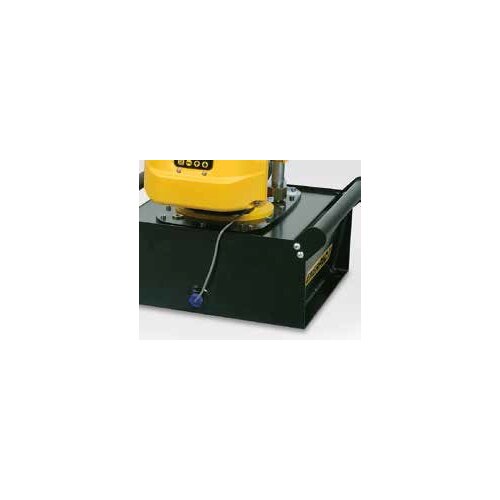
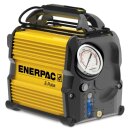
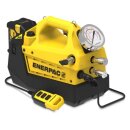
ZE3, Electric Hydraulic Pumps
 
0,00 € - 14.543,25 € *
Skip to footer
 of  

What is a hydraulic pump and how does it work?

Enerpac hydraulic pumps are high-pressure pumps that pressurize hydraulic oil to power tools such as hydraulic cylinders, presses, torque wrenches, or pullers. They are used wherever high forces are required with precision, safety, and repeatability – for example in industry, plant engineering, steel construction, and maintenance.

A hydraulic pump converts drive energy (manual force, electric motor, or compressed air) into hydraulic pressure. The principle is based on pressure transmission in liquids: pressure can be transferred with minimal loss via hydraulic oil to cylinders and tools.

  1. Oil intake from the reservoir
    The pump draws hydraulic oil from the integrated reservoir.
  2. Pressure build-up in the pump element
    A pumping mechanism (depending on the design) compresses the oil. Many Enerpac solutions operate with multi-stage systems: initially a high flow rate for fast movement, followed by high pressure for the actual force application.
  3. Delivery through the high-pressure line
    The pressurized oil flows via the high-pressure connection, coupling, and hydraulic hose to the connected tool.
  4. Force generation at the tool
    In the hydraulic cylinder, the pressure acts on the piston surface – generating the desired force (e.g. lifting, pressing, clamping, or turning).

Which technical parameters are important when buying?

  • Maximum operating pressure
    Enerpac hydraulic pumps often operate up to 700 bar. The permissible pressure must be compatible with the tool, hose, and couplings.
  • Flow rate / delivery capacity
    The flow rate determines the speed of the hydraulic cylinder. Higher delivery capacity results in faster work cycles.
  • Reservoir volume
    The oil reservoir must be large enough to reliably supply the oil demand of the connected hydraulic system.
  • Drive type
    Enerpac pumps are available as manual, electric, or air-driven pumps – depending on the application, mobility requirements, and work intensity.
  • Valve control
    Manual valves are suitable for simple applications, while solenoid valves are used for automated processes.
  • Cylinder type
    The pump must match the single-acting or double-acting hydraulic cylinder used.
  • Connections and compatibility
    High-pressure connections, hoses, and couplings must match the system and the maximum pressure.
  • Safety features
    Important features include pressure relief valves, pressure gauges, and overload protection.

Advantages of Enerpac hydraulic pump


Durability

Thanks to high-quality materials and precisely fitting connections, our pumps are designed for years of demanding industrial use.

Versatility

Thanks to standardized pressure connections, the pumps can be flexibly integrated into existing hydraulic systems.

Precision

Modern valves enable millimeter-precise control of the hydraulic oil.

High force transmission

Even compact designs can move enormous loads.

 The different drive types in detailed comparison

To find the right hydraulic pump for your specific hydraulic system, it is important to look at the technical performance data and the type of drive.

Type Drive / Energy Source Key Features Ideal Application Area

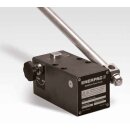
Hydraulic hand pump

  • manual
  • self-contained
  • extremely robust
  • precise load control
  • assembly
  • laboratory
  • emergency release systems

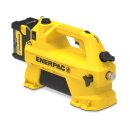
Battery-powered hydraulic pump

  • lithium-ion battery
  • lightweight and compact
  • maximum mobility without cables
  • construction sites
  • mobile service
  • hard-to-reach locations

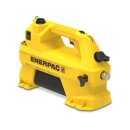
Electric hydraulic pump

  • mains power (230V / 400V)
  • high-performance hydraulic power unit
  • usually stationary or mounted on wheels
  • industrial production
  • workshops
  • heavy lifting operations

Pneumatic hydraulic pump
  • compressed air (compressor)
  • explosion-proof
  • easy operation via foot or hand switch
  • paint shops
  • mining
  • workshops with central compressed air supply

Differences and application areas in detail


  1. Hydraulic hand pumps: Maximum independence
    These classic pumps require no external power source. They are ideal for short-term applications or where precise, millimeter-level control is required. Thanks to their robust construction, they are virtually maintenance-free and perfectly suited for operating hydraulic cylinders.
  2. Electric & battery-powered solutions: Power at the push of a button
    If you need to move large volumes or operate a hydraulic system continuously, an electric hydraulic pump is often the first choice. Modern battery-powered variants bridge the gap between mobility and convenience and are particularly popular for service applications where no power connection is available nearby.
  3. Pneumatically operated pumps: The specialists
    By using available compressed air, hydraulic oil is efficiently pressurized. These pumps are often lighter than electric models and are particularly suitable for environments where electrical sparks must be avoided.

How to choose the right hydraulic pump

Selecting the right hydraulic component is crucial for safety and efficiency. Pay attention to the following points:

  1. Required operating pressure: Does the pump’s maximum pressure match your hydraulic cylinder?
  2. Desired speed: A higher flow rate ensures faster extension of the pistons.
  3. Installation compatibility: Check in advance whether all connections in your system fit together.
  4. Application environment: Do you need a mobile battery-powered solution, or would a stationary hydraulic power unit with a mains connection be more suitable?

Technical check: Single-acting vs. double-acting

A key difference when choosing a pump is how the return flow of the hydraulic fluid is controlled:

  • Single-acting: The pump has one connection. It pushes oil into the cylinder to lift loads. The return movement occurs through the load itself or via a built-in spring in the cylinder.
  • Double-acting: The pump has two connections (advance and return). The hydraulic oil is actively pumped in both directions. This is necessary when the cylinder must also actively “pull” or when precise return speed control is required.

The importance of usable oil volume

Often underestimated but critical for proper operation: the pump’s reservoir volume. The usable oil volume indicates how much hydraulic oil can actually be pumped into the system before the reservoir runs empty.

  • Why is this important? If you operate several large cylinders at the same time, the reservoir volume of the hydraulic power unit must be large enough to fully extend all pistons.
  • Safety margin: There must always be enough hydraulic fluid remaining in the reservoir so that the pump does not draw air through the suction port, which could lead to cavitation and damage to the piston pump.

When purchasing, make sure that the reservoir volume is about 20 to 30 percent higher than the total volume of all connected hydraulic consumers.

Discover our range of hydraulic pumps


Manual hydraulic pumps

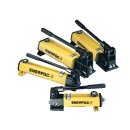
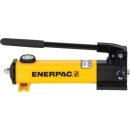
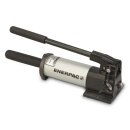
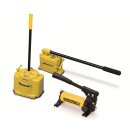
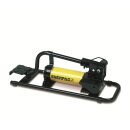
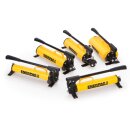
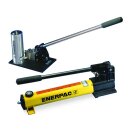
Enerpac’s range includes numerous manual hand and foot pumps designed for load capacity, durability, and ease of use. Thanks to the wide selection of hydraulic hand pumps, the right pump is available for virtually every situation. In addition, the manual hand and foot pumps are equipped with numerous safety features, ensuring both performance and safety for the operator.

Manual hydraulic pumps in our range:

  • P-Series lightweight hand pumps
  • P-Series hand pumps for extreme conditions
  • MP-Series hand pumps for various fluids
  • P-Series lightweight foot pump

Air-driven hydraulic pumps

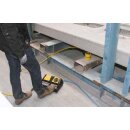
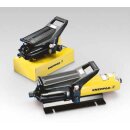
Enerpac air-driven hydraulic pumps stand out for their high efficiency, improved productivity, and proven reliability. They are designed to deliver compact compressed-air-powered hydraulic pressure. In addition, they offer high performance and precise control thanks to accurate regulation. The pump drive units are engineered for safety, durability, and increased oil flow.

Air-driven hydraulic pumps in our range:

  • PA-Series air-driven hydraulic pumps
  • PAM-Series air-driven hydraulic pumps
  • PA-Series air-driven hydraulic pumps, Turbo II
  • XA-Series air-operated hydraulic pumps
  • ZA4-Series air-driven hydraulic pumps

Battery-powered hydraulic pumps

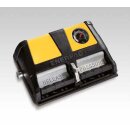
Enerpac battery-powered hydraulic pumps offer a strong combination of mobility, speed, and safety. They are particularly suitable for locations without access to electricity, as well as indoor environments where trip hazards, ergonomics, or space-saving operation are important. The battery pumps are compatible with all small to medium-sized cylinders and hydraulic tools. Thanks to the lithium-ion battery, the pumps provide long operating times even under demanding conditions.

Battery-powered hydraulic pumps in our range:

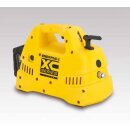
  • XC-Series battery-powered hydraulic pumps
  • ZC-Series battery-powered hydraulic pumps

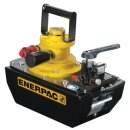
Electric hydraulic pumps

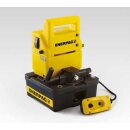
Enerpac electric hydraulic pumps stand out for their efficiency, durability, and performance. The features and advantages of these electric hydraulic pumps often exceed those of conventional high-pressure pumps. The hydraulic power units of the Z-Series are considered market leaders in industrial hydraulic pump technology.

Electric hydraulic pumps in our range:

  • E-Series electric hydraulic pumps, E-Pulse®
  • ZU4-Series electric pumps
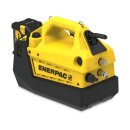
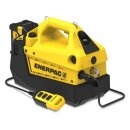
  • ZE-Series electric pumps
  • PU-Series compact electric pumps
  • PE-Series electro-hydraulic submersible pumps

Gasoline-powered hydraulic pumps

Enerpac gasoline-powered hydraulic pumps are designed for high efficiency, increased bypass pressure, and improved productivity. The range of high-pressure gasoline hydraulic pumps extends from small, portable units to powerful drive units with large capacities.

Gasoline-powered hydraulic pumps in our range:

  • ZG-Series engine-driven pumps

Our FAQ

Frequently asked questions about hydraulic pumps


The safety valve of hand pumps protects against overpressure, but users should still inspect all components regularly. DGUV Rule 113-020 recommends replacing hydraulic hoses after a maximum of six years in normal operation or after two years in applications with higher stress. Regular inspections and the replacement of wear parts such as seals or batteries help extend the service life of the pumps.


  • Battery-powered hydraulic pumps – portable, battery-operated pumps for mobile applications.

  • Hydraulic hand pumps – manual pumps that operate without electricity, batteries, or compressed air.

  • Electric hydraulic pumps – mains-powered pumps, usually with high flow rates and optional digital features.

  • Pneumatic (air-hydraulic) pumps – pumps powered by compressed air and often operated using foot pedals.


Which hydraulic oil should be used depends on the pump manufacturer’s recommendations and the specific operating conditions. Important criteria include the oil’s viscosity, the suitable temperature range, and compatibility with the installed seals. For Enerpac hydraulic pumps, the use of Enerpac hydraulic oil is generally recommended.


In addition, in the category System components you will find useful additions such as pressure gauges, distribution blocks, or support plates, which allow you to build your system safely and efficiently. There are also suitable solutions for the safe lifting and movement of loads.

In the category Lifting means you will find products such as round slings, shackles, or lifting points, which support applications where loads must be positioned or lifted precisely. Combined with your hydraulic pumps, this creates a complete and efficient lifting and positioning system.

If you need support with your selection or would like individual advice, you can reach us at any time via info@glds.de or by phone at +49 (0) 2103 9442-0. We will be happy to assist you!

Skip to productlist Skip to main content

Accessibility

Für eine leichtere Bedienbarkeit
This is a sample text. The sample text helps you to better recognize the effect of the settings.

Welcome!

Please login or register.
Login for registered customers

Comparelist

Add some products to compare.
Please add at least two items to the comparison list.

Wishlist

Your favorite products

Visibility:

Find

No results
results for:
Enter at least 4 letters

Headline

Eine Subline
static content
static content
start
Ende

Another Headline

Eine Subline
Body Content